DIY Bathroom Remodel on a Budget: A Practical Guide
By Editorial Team
Last updated: February 19, 2026
A New Bathroom Does Not Require a New Budget
The average professional bathroom remodel costs $10,000 to $25,000, and high-end renovations can exceed $40,000. Those numbers discourage many homeowners from updating a dated, worn-out bathroom. The truth is that a strategic, do-it-yourself approach can deliver a dramatic transformation for a fraction of the professional price.
The key is knowing where to invest your limited dollars and where to save. Not every surface needs to be ripped out. Sometimes the most effective upgrade is the one that changes how the room feels rather than rebuilding it from scratch.
Assess What You Have
Before buying anything, take a clear-eyed look at your existing bathroom.
- What is structurally sound? If the tub is in good condition but looks dated, refinishing is far cheaper than replacing it. If the vanity cabinet is solid but the countertop is stained, replace only the top.
- What is damaged? Water-damaged flooring, cracked tiles, or a leaking toilet flange need to be addressed — these are not cosmetic issues.
- What is purely cosmetic? Brass fixtures from the 1990s, a builder-grade mirror, an outdated light bar, and old paint are all easy wins that cost little to change.
Make a list of must-do repairs and nice-to-have upgrades. Tackle the repairs first, then allocate remaining budget to the cosmetic items that will have the biggest visual impact.
Set a Realistic Budget
Here is what each major component typically costs for a DIY installation:
| Component | Budget Range (DIY) |
|---|---|
| Paint (walls and ceiling) | $30 - $80 |
| New faucet | $50 - $200 |
| Vanity with countertop and sink | $200 - $800 |
| Toilet | $100 - $300 |
| Tile flooring (materials) | $100 - $400 |
| Tub surround or tile surround (materials) | $150 - $600 |
| Mirror | $30 - $150 |
| Light fixture | $40 - $200 |
| Hardware (towel bars, hooks, TP holder) | $30 - $80 |
| Total range | $730 - $2,810 |
Not every bathroom needs all of these. A focused cosmetic refresh — paint, faucet, mirror, light, and hardware — can be done for $200 to $500 and still make the room feel completely different.
High-Impact, Low-Cost Updates
Paint
Paint is the single cheapest way to change the look of any room, and it is especially effective in a small bathroom where the walls are the dominant visual element. Use a satin or semi-gloss finish for moisture resistance. Choose a light, neutral color to make a small bathroom feel larger, or go bold with a dark accent wall for character.
A gallon of quality bathroom paint costs $30 to $50 and is more than enough for a standard bathroom. Use a primer if you are covering a dark color or bare drywall.
Replace the Faucet
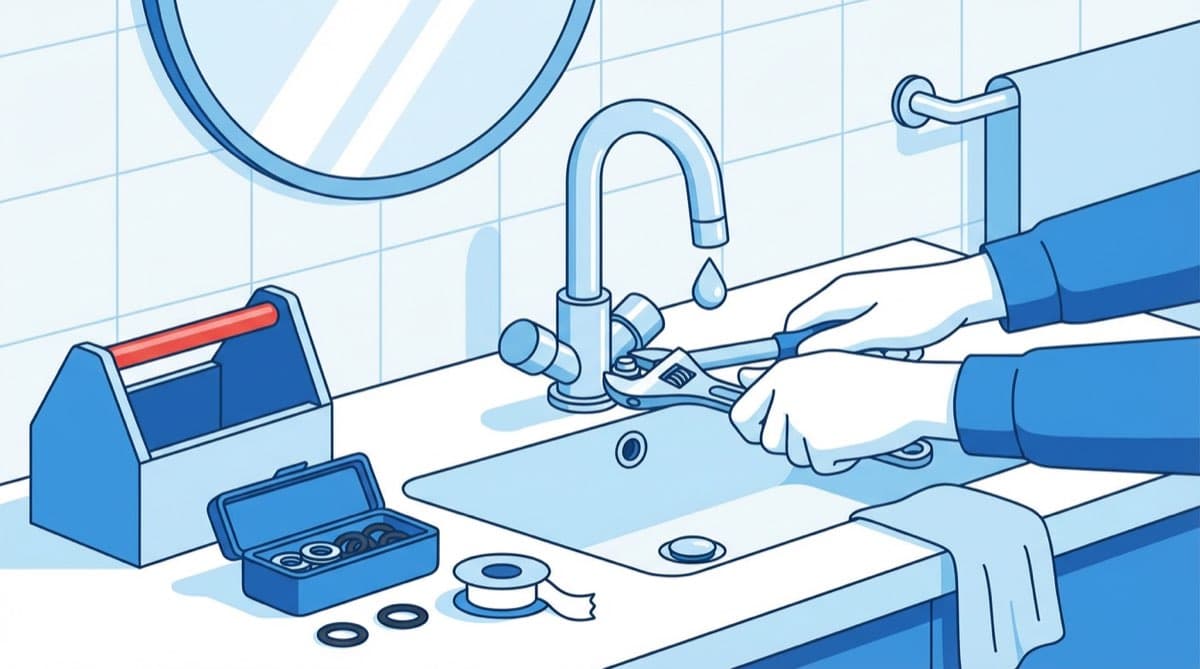
Swapping an old faucet for a modern one takes 30 to 60 minutes and requires only an adjustable wrench, basin wrench, and plumber's tape. A brushed nickel or matte black faucet instantly updates the look. Match the faucet finish to your other hardware for a cohesive appearance.
- Turn off the hot and cold shut-off valves under the sink.
- Disconnect the supply lines from the old faucet.
- Remove the mounting nuts underneath the sink and lift out the old faucet.
- Clean the sink surface where the old faucet sat.
- Install the new faucet following the manufacturer's instructions, using the included gasket or a bead of plumber's putty.
- Reconnect the supply lines, turn the water back on, and check for leaks.
Upgrade the Mirror and Lighting
A builder-grade plate mirror glued to the wall is one of the most dated-looking elements in an older bathroom. Replacing it with a framed mirror — or even adding a frame to the existing mirror using a mirror frame kit — creates a focal point.
Pair the mirror with a new light fixture. A modern vanity light with two or three shades costs $40 to $150 and is a straightforward swap: turn off the breaker, disconnect the old fixture, connect the new one (black to black, white to white, ground to ground), and mount it.
Replace Hardware
New towel bars, a toilet paper holder, robe hooks, and cabinet knobs cost $30 to $80 total and take less than an hour to install. Choose a consistent finish throughout the room. Matte black, brushed nickel, and brushed gold are popular choices that work with a wide range of styles.
Medium-Investment Upgrades
Replace the Vanity
A new vanity is often the single most transformative upgrade in a bathroom remodel. Pre-assembled vanities with countertops and sinks are available at home improvement stores for $200 to $800. This is dramatically cheaper than a custom-built option.
- Turn off the water supply and disconnect the supply lines and P-trap.
- Remove the old vanity. It is typically screwed to the wall through the back panel.
- Check the wall for damage and repair any drywall issues before installing the new vanity.
- Set the new vanity in position, check for level, and shim if necessary. Screw it to the wall studs.
- Install the new faucet on the countertop before setting the top on the vanity — it is much easier to work on the countertop while it is accessible.
- Set the countertop, reconnect the plumbing, and caulk the edges where the countertop meets the wall.
Replace the Toilet
A new toilet costs $100 to $300 for a quality model. Modern toilets use 1.28 gallons per flush or less, compared to 3.5 to 5 gallons for toilets made before 1994. The water savings alone can justify the upgrade.
- Turn off the water supply valve and flush the toilet to empty the tank and bowl. Sponge out remaining water.
- Disconnect the supply line.
- Remove the two bolts at the base of the toilet (the closet bolts) and lift the toilet straight up. Set it on old towels or cardboard.
- Scrape the old wax ring off the flange and inspect the flange for damage.
- Install a new wax ring on the flange, set the new toilet onto the bolts, and press down firmly to seat the wax ring. Alternate tightening the closet bolts to avoid cracking the porcelain.
- Reconnect the supply line, turn on the water, and test for leaks.
Tile the Floor
Replacing vinyl or worn tile with new ceramic or porcelain tile elevates the entire room. For a budget project, large-format tiles (12x12 or 12x24) are easier to install and require less grout.
- Remove the toilet and baseboards.
- Remove old flooring down to the subfloor. If the subfloor is plywood, install cement backer board (about $10 to $15 per sheet) to create a stable tile base.
- Dry-lay the tiles to plan your layout. Start from the center of the room and work outward so cut tiles end up at the walls where they are least visible.
- Apply thinset mortar with a notched trowel and set each tile, using spacers for consistent grout lines.
- Allow the thinset to cure for 24 hours, then grout the joints with a grout float.
- After the grout cures for 24 to 48 hours, apply a grout sealer to protect against moisture and staining.
- Reinstall baseboards and the toilet.
Where to Save and Where to Spend
| Spend More On | Save Money On |
|---|---|
| A quality faucet (you use it daily) | Tile (basic ceramic looks great and costs $1-$2/sq ft) |
| A comfortable toilet (one-piece, comfort-height) | Mirror (framing an existing mirror is nearly free) |
| Proper waterproofing behind tile | Vanity (stock pre-assembled units are well-made) |
| Good paint (moisture-resistant formula) | Hardware (affordable sets look just as good) |
Common Mistakes to Avoid
- Skipping waterproofing. Any area that gets direct water exposure (tub surround, shower walls) must have a waterproof membrane or cement backer board behind the tile. Drywall alone will fail within a few years and lead to mold.
- Ignoring ventilation. A bathroom without a functioning exhaust fan will develop mold and moisture damage regardless of how nice the remodel looks. Replace a worn-out fan or add one if there is none. Basic exhaust fans cost $25 to $80.
- Not checking for water damage. Before covering up old surfaces, check for soft or discolored subfloor around the toilet and tub. Addressing hidden water damage now prevents much more expensive repairs later.
- Choosing trendy over timeless. Bold tile patterns and trendy colors can feel dated quickly. Neutral tones and classic subway tile have remained popular for decades because they work with any decor.
A Suggested Weekend Plan
If you are tackling a cosmetic refresh, here is a realistic weekend schedule:
Saturday morning: Remove old hardware, light fixture, and mirror. Prep and paint walls and ceiling. Let paint dry.
Saturday afternoon: Install new light fixture and mirror. Install new faucet.
Sunday morning: Install new hardware (towel bars, hooks, toilet paper holder). Touch up paint around new fixtures.
Sunday afternoon: Caulk around the tub, sink, and toilet base with fresh silicone caulk. Clean up and enjoy the new bathroom.
For a more involved remodel that includes a vanity, toilet, or tile, plan for two to three weekends and stagger the work so that adhesives and grout have time to cure between steps.
A bathroom remodel does not have to be an all-or-nothing project. Start with the changes that bother you most, work within your budget, and improve the room in phases if needed. Even small updates can make a daily-use space feel significantly better.
Editorial note: This guide was written and reviewed by our editorial team. Cost estimates reflect national averages and may vary by region. Read our editorial standards.
Frequently Asked Questions
Related Articles
Water Heater Troubleshooting: Fix Common Problems Yourself
Diagnose and fix common water heater problems including no hot water, strange noises, leaks, and rusty water. Covers both tank and tankless units.
How to Fix a Running Toilet: 5 Easy DIY Fixes
Stop a running toilet with these simple DIY fixes. Learn how to diagnose and repair a faulty flapper, fill valve, float, and overflow tube step by step.
How to Unclog a Drain - DIY Tips
Learn simple steps to unclog any drain at home. Step-by-step guide with tools list and when to call a professional plumber.