HVAC Maintenance Checklist: Seasonal Guide for Homeowners
By Editorial Team
Last updated: February 7, 2026
Why HVAC Maintenance Matters
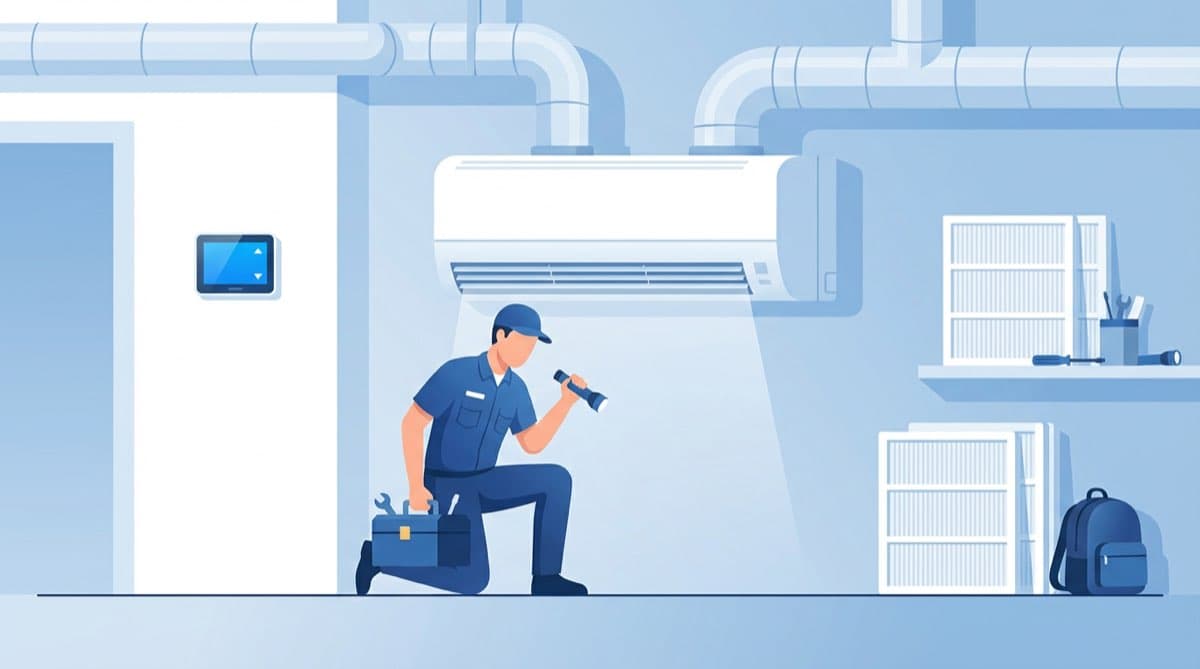
Your heating and cooling system is the most expensive mechanical equipment in your home. It also accounts for nearly half of your total energy bill. Regular maintenance keeps it running efficiently, extends its lifespan, prevents costly breakdowns, and maintains good indoor air quality.
The good news is that most HVAC maintenance tasks are simple enough for any homeowner. A few require a professional. This checklist covers both.
Quarterly Tasks (Every 3 Months)
Change the Air Filter
This is the single most important maintenance task. A clogged filter restricts airflow, causes the system to overheat or freeze up, and pushes dust and allergens back into your living space.
- Turn off the HVAC system.
- Locate the filter — it is typically in the return air duct, at the air handler unit, or behind a wall-mounted return grille.
- Slide the old filter out and note its size printed on the frame (for example, 16x25x1).
- Insert the new filter with the airflow arrow pointing toward the blower.
- Write the date on the filter edge so you know when it was last changed.
Test Your Thermostat
Make sure your thermostat is reading accurately and responding correctly.
- Compare the thermostat reading to a separate room thermometer placed nearby. They should be within 1 to 2 degrees of each other.
- Switch between heating and cooling modes to confirm the system responds.
- If you have a programmable or smart thermostat, verify your scheduled settings are still correct — power outages and software updates can sometimes reset them.
Twice-a-Year Tasks (Spring and Fall)
Clear the Condensate Drain Line
Air conditioners and high-efficiency furnaces produce condensation that drains through a PVC pipe, usually exiting near the outdoor unit or into a floor drain. Over time, algae and sediment can clog this line, causing water to back up and potentially overflow.
- Locate the drain line access point (a T-shaped PVC fitting with a cap, usually near the indoor air handler).
- Remove the cap and pour one cup of plain white vinegar into the line.
- Wait 30 minutes, then flush with warm water.
- Check the other end of the drain line to confirm water is flowing freely.
Inspect the Ductwork
Walk through your home and check all visible ductwork (in basements, attics, and crawl spaces) for the following:
- Disconnected sections — Joints that have separated or pulled apart.
- Visible holes or tears — Especially in flexible duct runs.
- Condensation or mold — Signs of poor insulation on the ductwork.
- Crushed or kinked flexible ducts — These restrict airflow significantly.
Seal small gaps with foil-faced HVAC tape (not standard duct tape, which degrades in heat). For larger issues, call an HVAC technician.
Annual Tasks
Schedule a Professional Tune-Up
Even the most diligent homeowner cannot replace a professional inspection. A trained technician will check refrigerant levels, electrical connections, motor amperage, heat exchanger integrity (critical for gas furnaces), and other components that require specialized tools and knowledge.
- Schedule cooling system service in spring before you need the AC.
- Schedule heating system service in early fall before the first cold snap.
Scheduling off-season avoids the rush and often costs less.
Clean the Outdoor Condenser Unit
The outdoor unit pulls air through its aluminum fins to release heat. Grass clippings, leaves, cottonwood fluff, and dirt can coat the fins and reduce efficiency.
- Turn off power to the unit at the outdoor disconnect switch or breaker.
- Remove any large debris (leaves, sticks) from around and on top of the unit.
- Use a garden hose to spray the fins from the inside out, working from top to bottom. Use a gentle stream — high pressure can bend the fins.
- Trim any shrubs or vegetation to maintain at least 2 feet of clearance on all sides.
- Make sure the unit is sitting level on its pad. A tilted condenser can cause compressor problems.
Check and Clean Vents and Registers
Remove the covers from supply and return registers throughout the house. Vacuum out any dust buildup inside the duct openings and wipe down the covers. Make sure no vents are blocked by furniture, curtains, or rugs — blocked vents create pressure imbalances that make your system work harder.
Seasonal Efficiency Tips
- Summer: Set the thermostat to 78 degrees when you are home and higher when away. Each degree below 78 increases cooling costs by roughly 3 percent.
- Winter: Set the thermostat to 68 degrees when you are home and lower at night or when away. Wear a layer instead of turning up the heat.
- Year-round: Use ceiling fans to circulate air. In summer, fans should rotate counterclockwise (pushing air down). In winter, reverse them to clockwise on low speed to push warm air down from the ceiling.
Maintenance Schedule Summary
| Task | Frequency |
|---|---|
| Change air filter | Every 1-3 months |
| Test thermostat | Quarterly |
| Clear condensate drain line | Twice a year |
| Inspect visible ductwork | Twice a year |
| Clean outdoor condenser unit | Annually |
| Professional tune-up | Annually (spring for AC, fall for heat) |
| Clean vents and registers | Annually |
Staying on top of this checklist takes very little time but makes a measurable difference in comfort, efficiency, and equipment longevity. Set calendar reminders for each task so nothing falls through the cracks.
Editorial note: This guide was written and reviewed by our editorial team. Cost estimates reflect national averages and may vary by region. Read our editorial standards.
Frequently Asked Questions
Related Articles
AC Not Working? Troubleshooting Guide Before You Call a Pro
Air conditioner not cooling? Walk through these DIY troubleshooting steps to diagnose and fix common AC problems before paying for a service call.
How to Install a Smart Thermostat: Step-by-Step Guide
Install a smart thermostat yourself in under an hour. Covers compatibility, wiring, setup, and configuration for Nest, Ecobee, and Honeywell thermostats.